Thinking Together: Strengthening Comprehension and Growing Competent Thinkers and Communicators
At our last staff meeting, we looked at the Spring RFRA data, compared to the Fall to look at where students improved and what areas still need our attention. We also asked staff to reflect on their instructional practice to better understand what strategies and instructional routines made the biggest impact.
What targeted actions did we take to address our school’s learning focus?
To support our school focus, How can nurturing students’ comprehension strategies develop their competencies as thinkers and communicators, teachers across Kindergarten to Grade 7 intentionally embedded comprehension instruction into daily literacy experiences. Teachers used explicit modelling and think-alouds to make their thinking visible and implemented a variety of routines and strategies including guided reading groups, read-aloud discussions, partner and group conversations, Say Something, Book, Head, Heart, double-entry journals, picture sequencing, sentence starters, and opportunities for students to explain and justify their thinking.
Across classrooms, teachers prioritized collaborative dialogue and rich discussion to support students in constructing meaning together. High-interest texts, frequent opportunities for oral language, and explicit teaching of comprehension strategies such as questioning, predicting, inferencing, responding, retelling and summarizing, and identifying purpose provided students with multiple opportunities to deepen their understanding and communicate their thinking.
These intentional instructional practices created opportunities for students to engage with texts, make their thinking visible, and develop as increasingly confident thinkers and communicators.
What gap or problem do these actions aim to address? Why was this particular strategy/action chosen?
Fall reading assessment data revealed that many students were performing in the Emerging and Developing ranges across several areas of comprehension. Questioning, identifying and using text features, making predictions, retelling and summarizing, and responding emerged as areas requiring additional support.
Through classroom observations and teacher reflections, we recognized that students often required support to move beyond literal understanding and develop deeper thinking about texts. Students needed opportunities to explain their thinking, build on the ideas of others, and communicate their understanding with increasing confidence.
These instructional approaches were intentionally selected because they emphasize explicit teaching, collaborative dialogue, and making thinking visible. By providing regular opportunities for students to discuss, question, infer, and justify their ideas, we aimed to strengthen comprehension while supporting students in developing as competent thinkers and communicators.
Based on quantitative and qualitative data (including feedback from scanning), how effectively has this strategy addressed the identified gap or problem?
1. Questioning showed the greatest growth
- Fall: 31% Emerging
- Spring: 12% Emerging
Students moved out of the Emerging category and into Developing and Proficient. Teachers frequently described using discussions, think-alouds, and routines that encouraged students to wonder, predict, and ask questions.
2. Students became stronger at responding with evidence
- Fall: 35% Proficient
- Spring: 54% Proficient/Extending
Teachers noted that student responses became more complete and that students increasingly supported their thinking with evidence.
3. Inferencing improved considerably
- Fall: 37% Proficient
- Spring: 56% Proficient/Extending
Many teachers specifically highlighted inferencing as an area of pride and attributed growth to modelling and collaborative discussion.
4. Retelling and summarizing improved
- Emerging decreased from 20% to 9%
- Proficient/Extending increased from 39% to 53%
Students became better able to identify important ideas and communicate their understanding.
5. Identifying purpose showed strong gains
- Proficient/Extending increased from 35% to 63%
- Emerging decreased from 16% to 9%
Intermediate teachers particularly noted growth in students' ability to think critically about why texts are written and how authors communicate meaning.
6. Overall, fewer students were Emerging
Across virtually every comprehension strand, the percentage of students in the Emerging category declined. This suggests that the instructional approaches used across K–7 are having a positive impact.
How will we move forward accordingly? What adjustments do we need to make if we have or have not achieved our goals?
As we move forward, we will continue to build on the practices that have positively impacted student learning while responding to areas identified through assessment data and teacher reflections. Our next steps include:
- Continuing to provide opportunities for collaborative dialogue and making thinking visible through explicit modelling and rich discussions.
- Strengthening students' ability to make meaningful text-to-self, text-to-text, and text-to-world connections.
- Intentionally building students' background knowledge through a variety of texts, experiences, and perspectives.
- Supporting vocabulary development and understanding of text features to deepen comprehension.
- Exploring how diverse texts and opportunities for identity connections can further strengthen engagement and understanding.
- Providing professional learning opportunities for staff focused on planning with differentiation to support the diverse strengths and needs of learners across our school.
- Continuing to use assessment data and teacher observations to adapt instruction and provide targeted support for students.
We are curious about how these actions will further develop students' competencies as thinkers and communicators and support all learners in accessing increasingly complex texts.
Image Gallery
Image
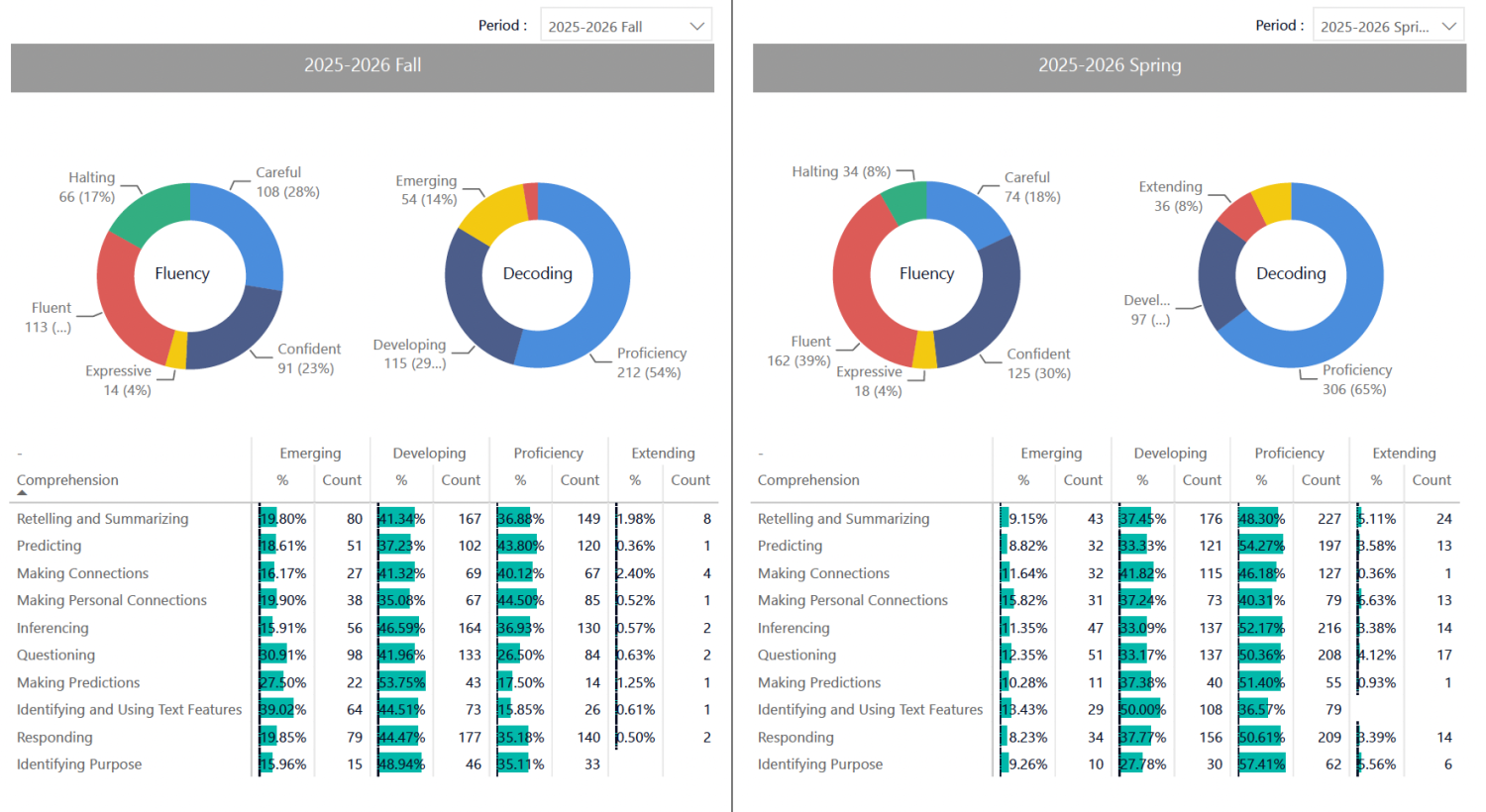
Image Gallery
Updated:
Tuesday, June 16, 2026